
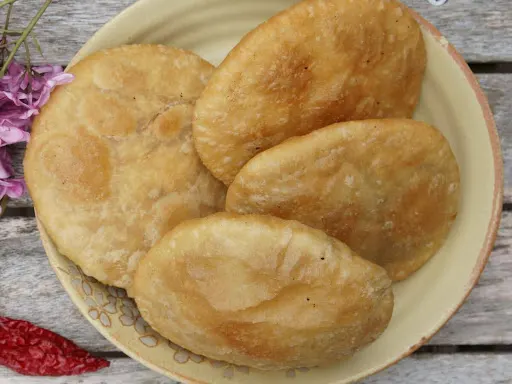
Babru is a traditional deep-fried bread from Himachal Pradesh, especially popular in the Kullu Valley. Often compared to kachori, it is typically stuffed with a flavorful paste of black gram (urad dal) and spices.
Babru is a traditional Himachali snack similar to kachori, known for its crispy texture and flavorful stuffing, commonly enjoyed during festivals and as a street food in the mountains.
Origin and Cultural Significance of Babru
Babru has deep roots in the culinary traditions of Himachal Pradesh:
- Originates from the Kullu Valley
- Widely prepared in local households and during festivals
- An important part of Himachali cuisine
It reflects the region’s love for hearty and flavorful foods.
Ingredients Used in Babru
The ingredients used in Babru are simple but create a rich taste:
- Wheat flour dough
- Urad dal (black gram) stuffing
- Spices like cumin, coriander, and chili
- Oil for deep frying
These ingredients give Babru its distinctive flavor and texture.
How Babru is Made (Step-by-Step Recipe)
Step 1: Preparing the Dough
Wheat flour is kneaded into a soft dough and allowed to rest.
Step 2: Making the Stuffing
Urad dal is soaked, ground into a paste, and mixed with spices.
Step 3: Shaping the Babru
Small portions of dough are stuffed with the dal mixture and flattened.
Step 4: Deep Frying
The stuffed dough is deep-fried until golden brown and crispy.
Also Read: Chamera Dam: Powering North India from the Ravi River
Babru vs Kachori: What’s the Difference?
Though Babru is often compared to kachori, there are key differences:
- Variation in dough preparation and stuffing
- Unique regional flavors of Himachal
- Slight differences in cooking techniques
Babru has its own identity rooted in mountain cuisine.
Taste and Texture of Babru
Babru offers a satisfying combination of textures and flavors:
- Crispy outer layer
- Soft and spicy filling
- Rich and savory taste
It is both filling and flavorful.
When and How Babru is Served
Babru is enjoyed in various settings:
- Served as breakfast or evening snack
- Popular during festivals and local fairs
- Often paired with chutney or tea
It is a staple comfort food in the region.
Where to Try Babru in Himachal Pradesh
To experience authentic Babru:
- Visit local food stalls in Kullu Valley
- Explore traditional dhabas and eateries
- Try it during local markets and festivals
These places offer the most authentic taste of Babru.
Nutritional Value of Babru
Babru is a hearty and energy-rich snack:
- High in carbohydrates from wheat
- Good source of protein from urad dal
- Provides energy for daily activities
Though fried, it is quite filling and nutritious in moderation.
Interesting Facts About Babru
- Often called the Himachali version of kachori
- Deeply rooted in local food traditions
- Commonly prepared during special occasions
It is one of the most loved snacks in Himachal.
Babru in Modern Times
Today, Babru is gaining wider popularity:
- Becoming popular among tourists
- Available in cafes and modern eateries
- Fusion versions are emerging
Despite changes, its traditional taste remains cherished.
Conclusion
Babru is a delicious representation of Himachal Pradesh’s culinary heritage. With its crispy texture, rich stuffing, and cultural significance, it continues to be a favorite snack among locals and visitors exploring the flavors of the Kullu Valley.
FAQ
Babru is a traditional Himachali deep-fried bread stuffed with spiced urad dal, similar to kachori.
It is most popular in the Kullu Valley and other parts of Himachal Pradesh.
Babru is made using wheat flour dough stuffed with urad dal paste and spices.
Babru is typically served hot with chutney or tea as a snack or breakfast.