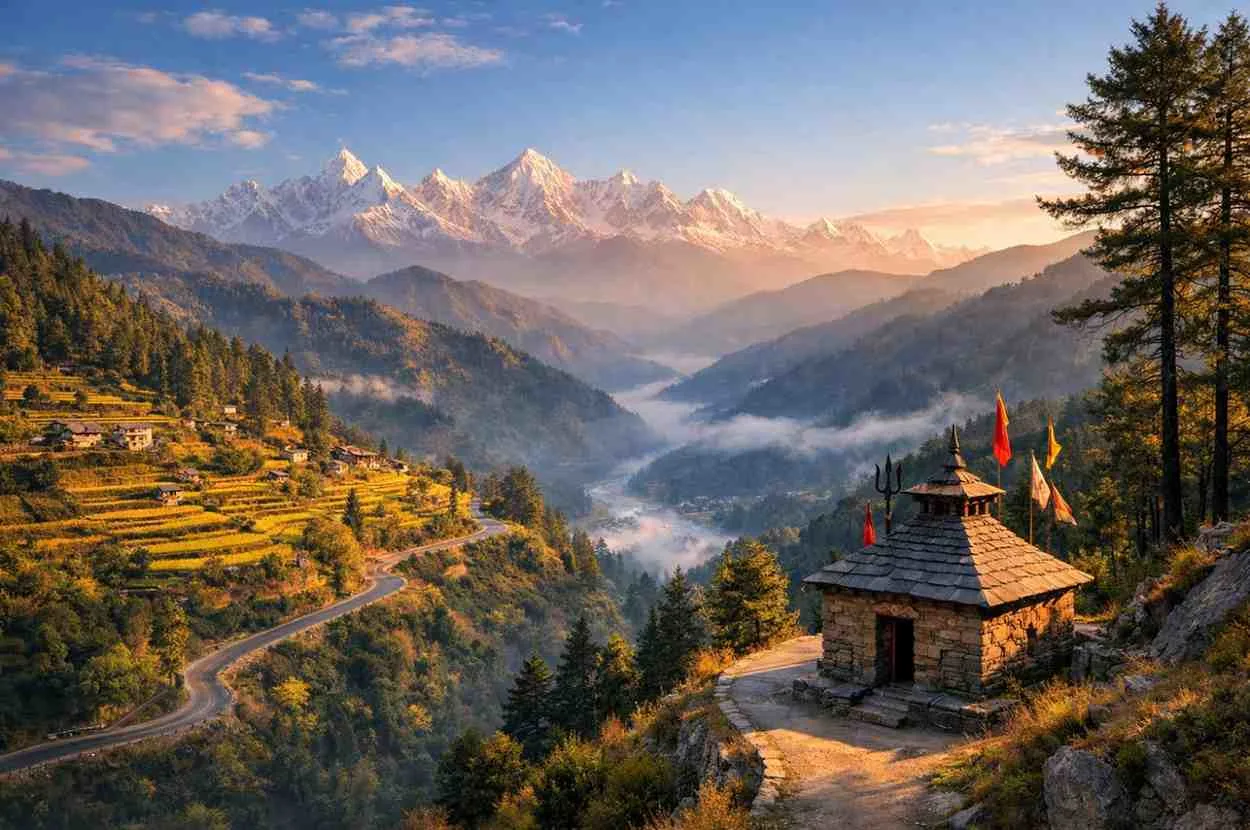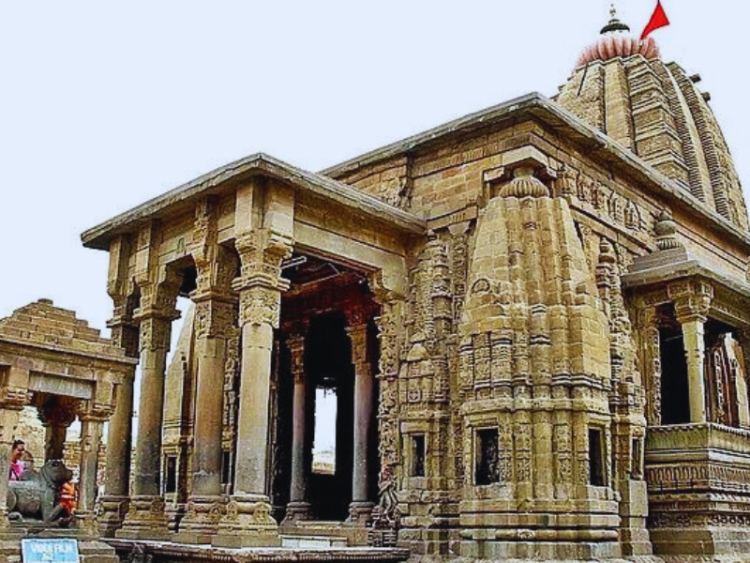
Tucked inside the calm Dhauladhar range of the Himalayas, the Baijnath Temple in Himachal Pradesh is a timeless wonder of spirituality, architecture, and history. Dedicated to Lord Shiva, this ancient temple is evidence of the continuing trust and loyalty that have molded India’s cultural terrain. Visiting Baijnath Temple is not only a pilgrimage but also a trip into the Himalayan spiritual core, where the divine encounters the magnificent.
History of Baijnath Temple
The story of Baijnath Temple begins in 1204 CE, when two local merchants—Ahuka and Manyuka (often rendered as Kirti/Manyuka in legends)—built this Shaivite shrine on an older sacred site. An inscription records their work, and over the centuries, the temple has been protected and revered, now overseen by the Archaeological Survey of India (ASI). The temple’s very name gave the town its identity. Wikipedia
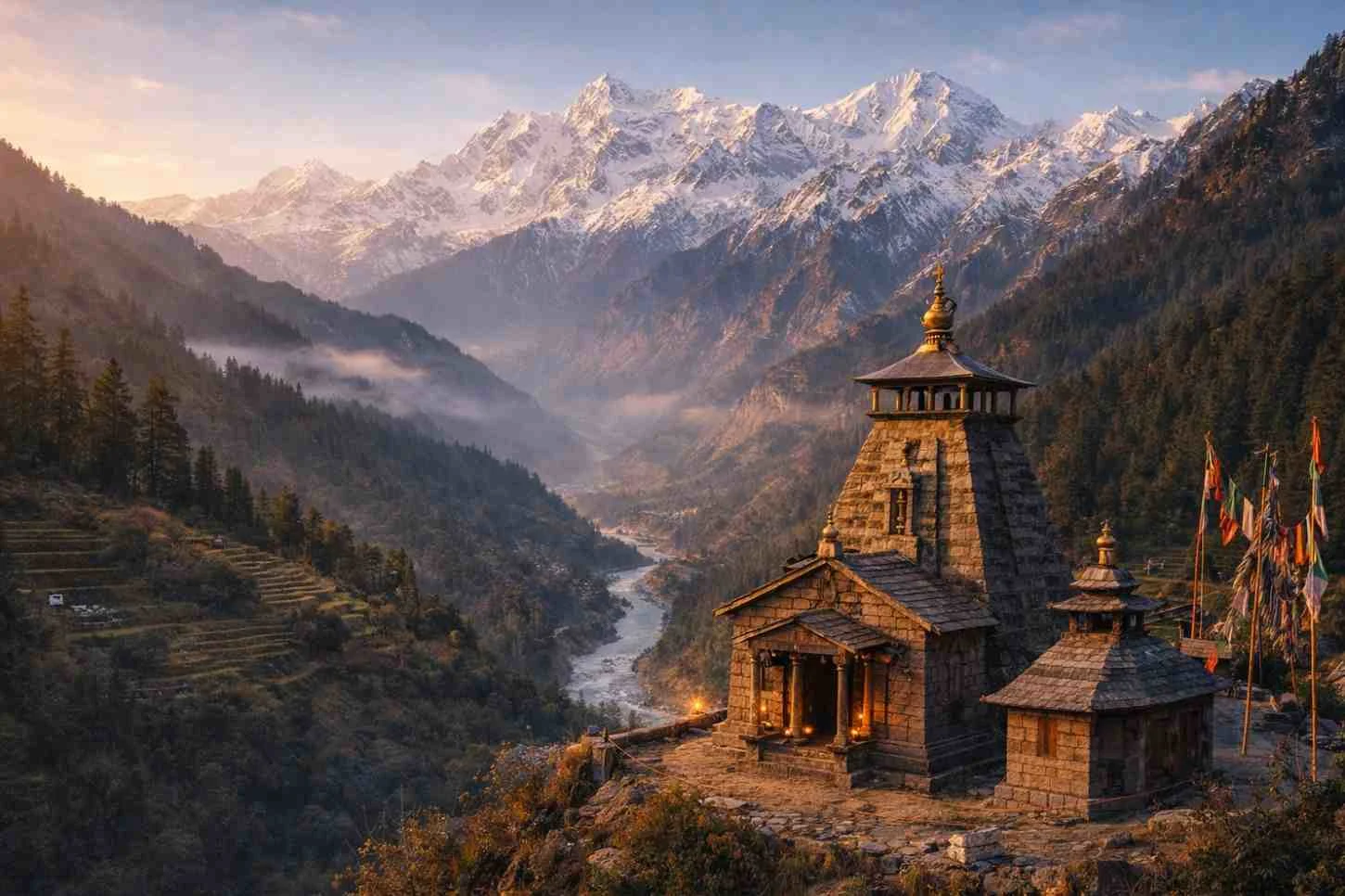
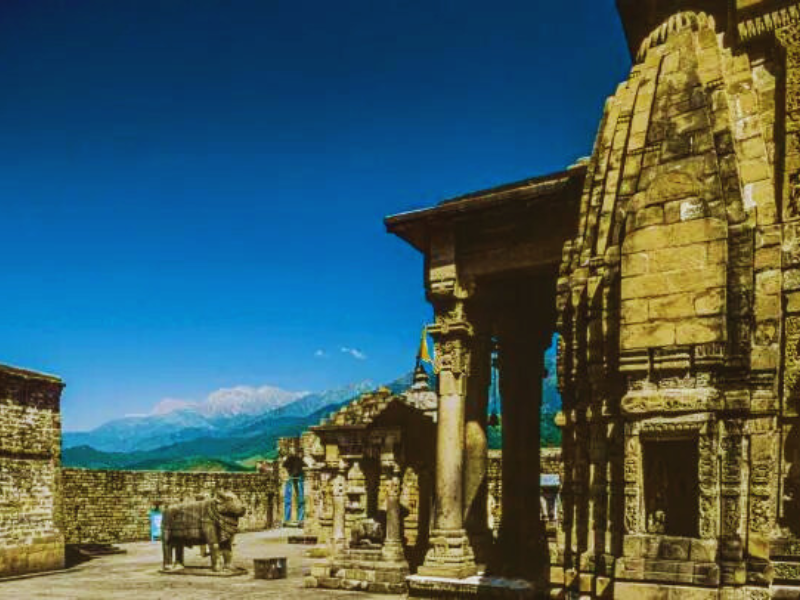
Architecturally, Baijnath is classic Nagara style—North India’s temple idiom characterized by a soaring shikhara (tower), a sanctum (garbhagriha), and pillared halls. Its crisp stone craftsmanship and restrained ornamentation mirror the period’s design language and Himachal’s austere, mountain-suited aesthetics. The temple also surfaces in local chronicles of the Kangra Valley, and in regional lore about Shiva’s compassion and the healing grace of Vaidyanath. Wikipedia
Baijnath Temple Religious Significance
Vaidyanath means “divine healer,” and devotees come to Baijnath seeking physical and spiritual well-being under Shiva’s care. While many travelers ask whether Baijnath is one of the twelve Jyotirlingas, the canonical list places the Vaidyanath Jyotirlinga in eastern India; even so, Baijnath enjoys Jyotirlinga-like reverence in Himachal, with rituals and daily worship reflecting that stature. Major observances include Maha Shivratri, Makar Sankranti, and Vaisakha Sankranti, when the precinct thrums with hymns and conch-shell calls. Wikipedia+1
Local legends connect the site with Ravana’s devotion to Shiva. Many versions recount how the linga came to rest here when the demon-king—unable to carry it onward—set it down, sanctifying the spot forever. Whether approached as scripture-inspired lore or as a cultural memory, the narrative adds a powerful devotional layer and helps explain why Baijnath’s rituals and etiquette feel both intimate and awe-filled.
Baijnath Temple Architecture and Design
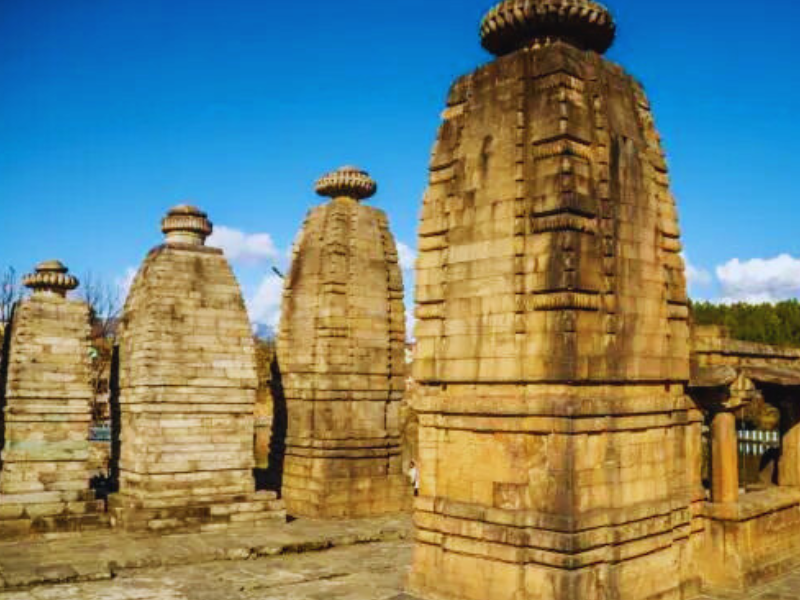
Walk through Baijnath’s gateway and you step into a stone-crafted world where every surface whispers a fragment of Himalayan art history. The shikhara—tall and tapering—anchors the skyline, while the mandapa (pillared hall) leads you into the garbhagriha where the Shiva linga resides. The stone carvings are measured rather than crowded, with bands of motifs and geometric detail that reward slow, attentive viewing.
Around the main temple, you’ll notice subsidiary shrines, platforms, and an open courtyard blessed with views of the Binwa River, a tributary of the Beas. This riverside setting strengthens the site’s tirtha character—a crossing place between the earthly and the divine—while the mountain air keeps the complex feeling contemplative even on busy days. Compared with other North Indian styles, Baijnath’s profile is leaner than, say, the more elaborate central-Indian spires, yet unmistakably Nagara in grammar.
Also Read: Chintpurni Temple, Himachal Pradesh, A Shakti Peeth in Una
Baijnath Temple and the Two Brothers
Devotement and commitment abound in the account of the two brothers, Ahuka and Manyuka, who erected the Baijnath Temple. According to legend, the brothers were childless and yearning for a son very much. Seeking a boon, they asked Lord Shiva and promised, should their request be fulfilled, to erect a temple. Their wishes were granted, and they came upon blessings—a son. In thanks, they built the Baijnath Temple, dedicated to Lord Shiva.
The brothers not only visited but also significantly helped the temple to be built. Every stone of the temple reflects their great awareness of Vedic architecture and relentless loyalty to Lord Shiva. The temple is evidence of their devotion and helps to contribute to the spiritual legacy of the area.
King Sansar Chand and the Baijnath Temple
One of the most well-known supporters of the Baijnath Temple was King Sansar Chand, the Kangra kingdom monarch. Under his rule in the late 18th and early 19th centuries, he cared about the maintenance of the temple and actively helped to preserve it. A devotee of Lord Shiva, Sansar Chand gave various gifts to the temple, including money for ceremonies and building of other buildings inside the complex.
The Baijnath Temple developed under King Sansar Chand’s sponsorship as a prominent religious center drawing pilgrims and academics from all around. His efforts guaranteed that the temple stayed a hive of cultural activity and prayer for the area.
How Baijnath Temple Survived the Earthquake of 1905
The fact that the Baijnath Temple survived the catastrophic earthquake of 1905 is among its most amazing features in the past. Striking the Kangra Valley with enormous power, the earthquake destroyed numerous structures and temples in the area. But the Baijnath Temple came out mostly unharmed, evidence of the architectural wonder that is engineering.
Though it also refers to the sophisticated architectural methods used by its architects, the temple’s longevity is sometimes ascribed to the heavenly protection of Lord Shiva. The temple’s strategic placement on firm ground and its substantial stone construction helped it resist the shocks that knocked down many other buildings.
Best Time to Visit Baijnath Temple
For clear skies and comfortable temperatures, the sweet spots are March–June (spring into early summer) and September–November (autumn). Winters can be charmingly crisp, while monsoon (July–August) brings lush hills and occasional showers. If you crave the fullest devotional energy, time your visit for Maha Shivratri, when the temple hosts special poojas, music, and a sea of lamps—an unforgettable spiritual experience. Incredible India
Baijnath Temple Travel Tips
Dress code & etiquette:
Dress modestly (shoulders/knees covered). Remove footwear before entering the sanctum, and keep voices low.
- Photography:
Generally allowed in the outer complex. Check signs or ask a priest before shooting within the garbhagriha.
- Food & stays:
Palampur has a good spread of cafés, dhabas, and mid-range hotels; Baijnath town offers simple stays and eateries close to the temple.
- What to carry:
A light shawl in the evening, refillable water bottle, a small offering (flowers/bilva leaves), and comfortable walking shoes.
How to Reach Baijnath Temple
1. By Road:
Baijnath lies on NH 154 (Pathankot–Mandi). It’s about 16 km from Palampur, ~51–56 km from Dharamshala, and ~53–54 km from Kangra. Regular HRTC and private buses, as well as taxis, ply these routes, and the drive treats you to tea gardens and pine-scented valleys.
2. By Train:
The nearest stations on the Kangra Valley narrow-gauge line are Baijnath Paprola (BJPL) and Baijnath Mandir (BJMR), with BJPL and BJMR just ~2 km apart on the same stretch—handy for local access. For broad-gauge connections, most travelers route via Pathankot/Pathankot Cantt and transfer to the scenic toy train or to road transport. India Rail Info+1
3. By Air:
The closest airport is Gaggal (Kangra) Airport near Dharamshala; from there, it’s a beautiful road journey into the valley. Incredible India
4. Local Transport:
Auto-rickshaws and taxis are readily available in Baijnath/Palampur. If you love slow travel, the Kangra Valley train is a nostalgic ride through fields and foothills.
Baijnath Temple Nearby Attractions
Tashi Jong Monastery: A serene Drukpa Kagyu Buddhist complex known for its monastic crafts and prayer halls.
Bir Billing: India’s paragliding capital; Bir (landing site) and Billing (take-off) make a stunning add-on to your temple day. Distance from Baijnath is roughly a local drive—many travelers pair the two. Incredible India
Palampur Tea Gardens: Palampur Tea Gardens Stroll through neatly trimmed estates and sip fresh Kangra tea.
Andretta Village: An artist colony famed for Andretta Pottery and rural Himachal life.
Baijnath Temple Cultural & Festive Events
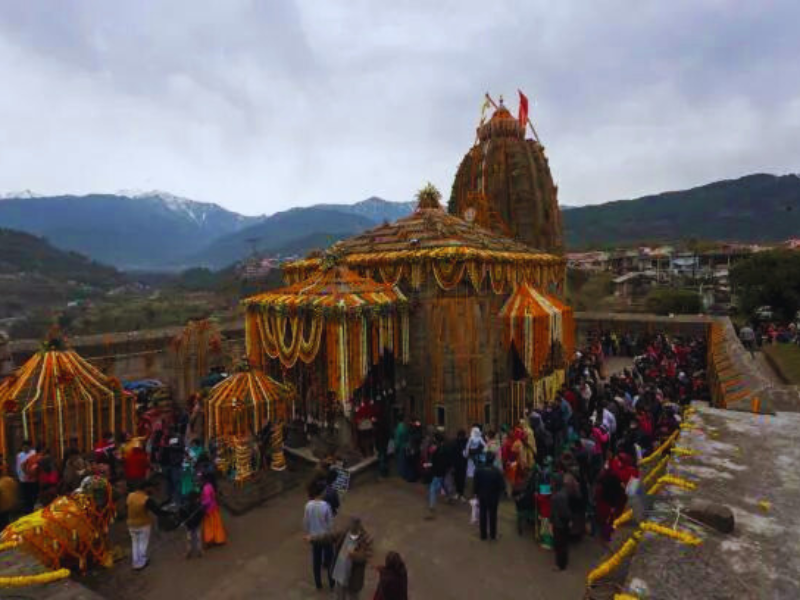
Maha Shivratri is the soul of Baijnath’s festival calendar—long lines of devotees, extended temple hours, elaborate abhishek rituals, and devotional music creating a luminous, communal faith experience. Other auspicious days include Makar Sankranti and Vaisakha Sankranti, each drawing steady footfall and local fairs with folk performances, prasad stalls, and craft sellers. Wikipedia
Conclusion:
The Baijnath Temple represents the rich cultural and spiritual legacy of Himachal Pradesh more than only a site of prayer. For those looking for a closer relationship with the holy, this must-visit location boasts architectural genius, historical history, and theological relevance. Whether your interests are history, Lord Shiva, or peace-seeking travel, the Baijnath Temple provides an experience that spans time and geography that will inspire respect and wonder.
Frequently Asked Questions (FAQ)
In Baijnath town, Kangra district, on NH 154. Wikipedia
Its 13th-century origin, Nagara architecture, and Shiva as Vaidyanath (divine healer). Wikipedia
Two merchants, Ahuka and Manyuka, in 1204 CE. Wikipedia
Over 800 years old, completed in 1204 CE. Wikipedia
Lord Shiva as Vaidyanath. Wikipedia
Not on the canonical list, but revered with similar devotion in Himachal. Wikipedia
Derived from Vaidyanath—“Lord of Physicians.” Wikipedia
Typically 6:00 AM–9:00 PM; aartis around morning/evening. Check locally for the day’s schedule. Incredible India+1
Yes, it’s open daily with standard darshan hours. Incredible India
Usually in outer areas; ask before photographing the sanctum.
Road: ~51–56 km from Dharamshala; ~16 km from Palampur. Buses/taxis widely available.
Gaggal (Kangra) Airport near Dharamshala. Incredible India
Close enough for an easy day trip; travelers commonly combine them. (Bir/Billing details appear alongside Baijnath in regional tourism guides.) Incredible India
~53–54 km from Kangra; Mandi is farther along NH 154 (plan ~3–4 hours by road, traffic/weather permitting).
Yes—more options in Palampur; dharamshalas and basic stays nearer the temple.
Limited street/temple-area parking; arrive early on festival days.
Yes; inquire at the complex or through hotels in Palampur.
Built in 1204 CE by Ahuka and Manyuka; a renowned Nagara shrine to Shiva/Vaidyanath. Wikipedia
Nagara (North Indian) style. Wikipedia
Because Shiva is worshipped here as Vaidyanath, the cosmic healer. Wikipedia
Local lore says the linga was set down here during Ravana’s journey, sanctifying the site.
Its age, living ritual, and rare, pristine Nagara profile against Dhauladhar peaks.
Yes—stone inscriptions and bands of carvings mark the temple’s history and art.
Connected more to Ramayana-era Ravana traditions in local telling.
Daily darshan, abhishek, and aartis; special poojas on festivals. Incredible India
Per the Hindu calendar (Feb–Mar); the temple hosts special events and extended darshan. Incredible India
Yes, often with a priest’s assistance; ask at the temple counter for offerings.
Typically on-site; festival days may see organized queues.
Early morning or late evening for calmer crowds; Shivratri for heightened devotion. Incredible India
Modest attire; remove footwear; respect no-photo zones.
Bir Billing, Palampur Tea Gardens, Tashi Jong, Andretta.
Yes—commonly paired in one outing. Incredible India
Yes—plan a relaxed full day.
Small village temples, tea factory tours, and Andretta’s pottery studios.
Simple eateries in Baijnath; wider choice in Palampur.
Seasonal prasad at the temple; try Kangra tea, local siddu, and homestyle Himachali thalis.
Yes—standard hill-station precautions apply.
Carry layers, arrive early, keep cash for offerings, and plan time to sit quietly in the courtyard.
Absolutely—observe basic temple etiquette.
No entry fee; donations are voluntary.
For darshan of Shiva as healer, heritage architecture, and peaceful Himalayan ambience. Wikipedia
Centuries of uninterrupted worship, riverine tirtha setting, and the Vaidyanath belief.
1–2 hours for a relaxed visit; longer if attending puja.
The Binwa River, a tributary of the Beas.
Shikhara profiles against Dhauladhar, river-view edges, and the carved pillared hall.
Yes—very popular combo. Incredible India
Absolutely—13th-century sanctity plus early-medieval art. Wikipedia
Mild spring/autumn, pleasant summers, monsoon showers, cool winters (chilly nights).
Layer up, start early, and watch for fog or frost on morning roads.
Jwalamukhi, Chamunda Nandikeshwar, and Masroor Rock-Cut temples (longer excursion).