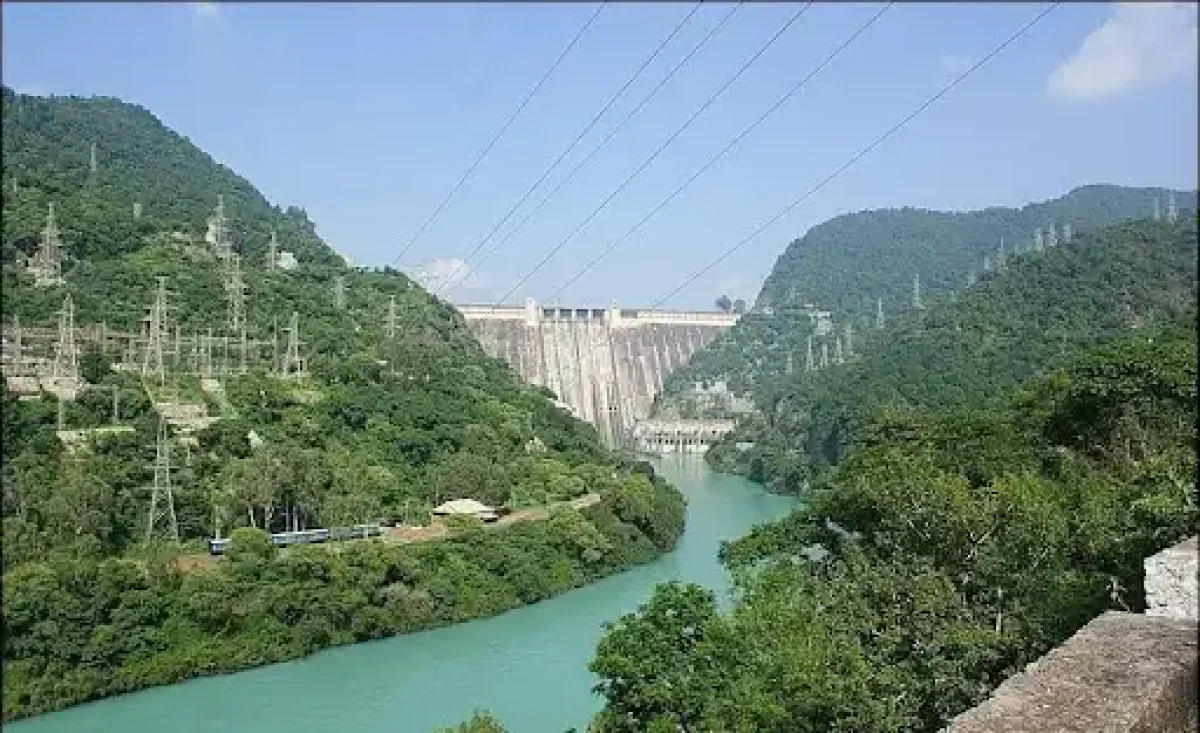
Bhakra Dam is one of India’s largest and most significant dams, constructed on the Sutlej River. It plays a vital role in irrigation, hydroelectric power generation, and regional development across North India.

Bhakra Dam transformed Himachal Pradesh and nearby states by providing irrigation, electricity, and flood control, making it a cornerstone of modern infrastructure in North India.

Location and Overview of Bhakra Dam

Bhakra Dam is strategically located in the Bilaspur district of Himachal Pradesh:

  • Built across the Sutlej River
  • One of the highest gravity dams in the world
  • Forms the massive Gobind Sagar reservoir

Its scale and importance make it one of India’s most iconic infrastructure projects.

Also Read: Babru of Himachal: The Mountain Version of Kachori

History Behind the Construction of Bhakra Dam

The idea of the Bhakra Dam dates back to pre-independence India, but was realized after independence:

  • Early planning began during British rule
  • Construction started after 1947
  • Championed by India’s first Prime Minister, Jawaharlal Nehru

Nehru famously referred to such projects as the “temples of modern India.”

Engineering and Construction Details

Bhakra Dam is a remarkable example of engineering excellence:

  • Type: Concrete gravity dam
  • One of the tallest dams in India
  • Created the vast Gobind Sagar reservoir

Its design allows it to withstand immense water pressure while ensuring stability.

Role of Bhakra Dam in Hydroelectric Power Generation

The dam is a major source of hydroelectric power:

  • Generates electricity for multiple states
  • Supplies power to Punjab, Haryana, Rajasthan, and beyond
  • Crucial for meeting North India’s energy demands

It has significantly contributed to industrial and urban development.

Impact on Agriculture and Irrigation

Bhakra Dam revolutionized agriculture in North India:

  • Provides irrigation to Punjab, Haryana, and Rajasthan
  • Played a key role in the Green Revolution
  • Boosted crop productivity and food security

It turned previously dry regions into fertile agricultural zones.

Economic and Social Impact on Himachal Pradesh

The project brought major socio-economic changes:

  • Development of roads and infrastructure
  • Creation of employment opportunities
  • Growth of towns and urbanization

It helped integrate Himachal Pradesh into modern economic systems.

Environmental Impact and Challenges

Despite its benefits, the Bhakra Dam also posed challenges:

  • Displacement of local communities during construction
  • Changes in local ecosystems
  • Ongoing water management concerns

Balancing development with sustainability remains important.

Tourism and Its Importance Today

Today, the Bhakra Dam is also a popular tourist attraction:

  • Offers stunning views of the Gobind Sagar reservoir
  • Attracts visitors interested in engineering and nature
  • Nearby areas provide scenic landscapes and experiences

It blends infrastructure with natural beauty.

Interesting Facts About Bhakra Dam

  • Among the tallest dams in India
  • Known as the “New Temple of Resurgent India”
  • Has a massive water storage capacity

It remains a symbol of India’s progress and ambition.

Why Bhakra Dam is Called the Backbone of North India

Bhakra Dam is often referred to as the backbone of North India because:

  • It is a multi-purpose project (power, irrigation, flood control)
  • Has a long-term impact on multiple states
  • Plays a strategic role in regional development

Its influence extends far beyond Himachal Pradesh.

Conclusion

Bhakra Dam stands as a symbol of India’s engineering excellence and vision for development. By transforming agriculture, generating power, and supporting livelihoods, it has played a crucial role in shaping modern Himachal Pradesh and the broader North Indian region.

FAQ 

Q1: Where is the Bhakra Dam located?

It is located in the Bilaspur district of Himachal Pradesh on the Sutlej River.

Q2: Why is the Bhakra Dam important?

It provides irrigation, electricity, and flood control to several northern states.


Q3: Who built the Bhakra Dam?

It was initiated under the leadership of Jawaharlal Nehru.


Q4: What is the height of Bhakra Dam?

It is one of the tallest gravity dams in India.