Key Monastery: A Complete Guide to Spiti Valley’s Iconic Buddhist Monastery
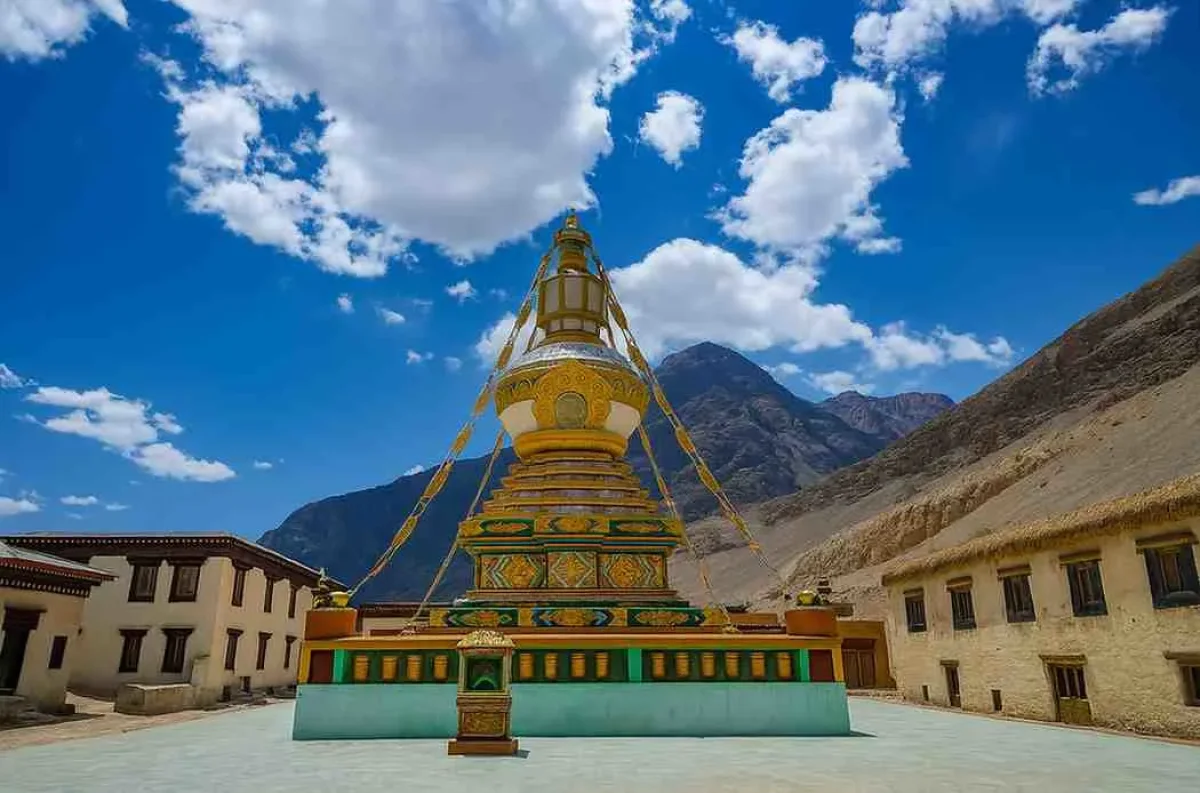
Key Monastery, also known as Ki or Kee Monastery, is one of the most important Buddhist monasteries in Spiti Valley, Himachal Pradesh. Perched dramatically on a hill above the Spiti River, the monastery is known for its distinctive architecture, Buddhist heritage and spectacular high-altitude surroundings.

Located around 14 km from Kaza, Key Monastery is one of the most popular cultural attractions on a Spiti Valley itinerary. Visitors come here to experience its Buddhist heritage, traditional architecture and peaceful mountain setting.
If you are planning a wider Spiti Valley trip, read our detailed Kaza Travel Guide for information about accommodation, sightseeing and nearby attractions.
| Editorial Note: This guide has been prepared using official tourism information and established travel references. The author has not personally visited Key Monastery. We therefore do not present personal observations as first-hand experiences. Opening arrangements, road conditions, religious activities and access to specific monastery areas can change, so travellers should confirm current local conditions before visiting |
Key Monastery at a Glance
| Detail | Information |
|---|---|
| Also known as | Ki Monastery / Kee Monastery |
| Location | Spiti Valley, Himachal Pradesh |
| District | Lahaul and Spiti |
| Nearest major town | Kaza |
| Distance from Kaza | Approximately 14 km |
| Elevation | Approximately 4,166 metres |
| Type | Tibetan Buddhist monastery |
| Landscape | High-altitude cold desert |
| Best travel period | Generally June to early November, subject to weather and road conditions |
| Main attractions | Buddhist heritage, architecture and mountain views |
Where Is Key Monastery?
Key Monastery is located in Spiti Valley in Himachal Pradesh's Lahaul and Spiti district, around 14 km from Kaza. The monastery stands on a hill overlooking the Spiti River and surrounding high-altitude landscape.
At approximately 4,166 metres above sea level, Key is situated in a cold-desert environment. The surrounding landscape is dry, rugged and dramatically different from the greener Himalayan regions of Himachal Pradesh.
Kaza is the most convenient base for visiting Key Monastery. The town has accommodation, restaurants and other basic travel facilities, making it practical for exploring nearby attractions.
For a broader overview of the region, see our Kaza Travel Guide.
Why Is Key Monastery Famous?
Key Monastery is particularly known for three things:
1. Buddhist Heritage
Key is an important centre of Tibetan Buddhist learning and practice in Spiti Valley. It remains a living religious institution rather than simply a historical monument.
2. Fortress-Like Architecture
The monastery has a compact, layered appearance that follows the steep hillside. Its whitewashed structures, narrow passages and interconnected sections give it a distinctive fortified character.
3. Himalayan Setting
Key Monastery overlooks the Spiti Valley, providing expansive views of the surrounding mountains and river landscape.
The combination of architecture, Buddhist culture and dramatic terrain makes Key one of the most recognisable landmarks in Spiti.
History of Key Monastery
Key Monastery has a long association with the development of Buddhism in Spiti Valley.
The monastery is generally described as dating back to the 11th century. Its history is connected with the development of Tibetan Buddhism in the western Himalayas and the religious traditions that developed across Spiti.
Over the centuries, Key experienced destruction, rebuilding and architectural changes. This history helps explain its unusual appearance, which developed gradually rather than being constructed as one uniform building.
Historical accounts can differ on specific details of its foundation and development, so disputed origin stories should be treated as traditional or historical accounts rather than absolute facts.
Key Monastery Architecture
One of the most interesting features of Key Monastery is its architecture.
The monastery rises in layers along the hillside, creating a fortress-like appearance. Inside, visitors may find narrow corridors, prayer spaces, traditional Buddhist artwork and religious objects.
Its architecture reflects the practical and spiritual requirements of a Buddhist community living in a remote, high-altitude environment.
Visitors should remember that Key is an active religious institution. Some rooms or areas may be restricted, particularly during prayers and other religious activities.e.
Buddhist Art and Cultural Heritage
Key Monastery is associated with traditional Tibetan Buddhist art and religious objects, including murals, thangkas, scriptures and statues.
These objects are not simply museum pieces. They form part of the living religious heritage of Spiti and are connected with Buddhist teaching, meditation and ritual practices.
Photography rules may vary by area. Always ask permission before photographing prayer halls, religious objects, monks or ceremonies.
Life at Key Monastery
Key Monastery continues to function as a centre of Buddhist learning and religious practice.
Monks study Buddhist philosophy, participate in prayers and maintain traditions associated with the monastery. Visitors should therefore approach Key as a functioning spiritual institution rather than only a tourist attraction.
If you arrive during prayers or teaching sessions, maintain silence and follow instructions from the monastery authorities.
Festivals and Religious Events
Buddhist festivals and religious ceremonies are an important part of life in Spiti Valley.
Key Monastery is associated with traditional Buddhist ceremonies and masked-dance performances. However, festival dates can vary according to the Tibetan lunar calendar and local monastery schedules.
If attending a festival is an important part of your itinerary, confirm the current schedule locally instead of relying on a fixed date published online.
Best Time to Visit Key Monastery
The best time depends on your route, weather and current road conditions.
June to September
These months are popular for travelling through Spiti because road access is generally more favourable and daytime conditions are comparatively suitable for sightseeing.
October to Early November
Autumn can provide clear mountain views and fewer visitors, but temperatures drop quickly, particularly after sunset.
Winter
Winter transforms Spiti into a snowy high-altitude landscape. However, snow, freezing temperatures and road conditions can make travel significantly more difficult.
For travellers interested in winter landscapes, read our guide to Snowfall Places in Himachal Pradesh.
For general Spiti travel planning, Himachal Pradesh Tourism identifies June to early November as a favourable period, although actual accessibility depends on weather and road conditions.
How to Reach Key Monastery
From Kaza
Kaza is the easiest base for visiting Key Monastery. The monastery is approximately 14 km from Kaza and can be reached by road.
Local taxis and private vehicles are commonly used for sightseeing around the Kaza–Key–Kibber area.
If you are planning accommodation and sightseeing around Kaza, see our complete Kaza travel guide.
From Manali
Travellers arriving from Manali generally enter Spiti through the Manali–Kaza route when the relevant high-altitude roads and passes are open.
Road accessibility is seasonal and highly dependent on snow, weather and local conditions.
Travellers using the Manali side may also encounter the Atal Tunnel before continuing towards the Lahaul-Spiti region.
Do not assume that the entire Manali–Kaza route is accessible throughout the year.
From Shimla
The Shimla–Kinnaur–Spiti route provides another approach to the valley and is commonly used for longer Spiti circuits.
Road conditions can change quickly in the Himalayas, so check current local updates before starting the journey.
Altitude and Acclimatisation
Key Monastery is located at approximately 4,166 metres, making acclimatisation an important consideration.
Travellers arriving directly from low-altitude areas should avoid rushing into strenuous activities.
For a safer visit:
- Spend time acclimatising in Kaza or another suitable stop.
- Stay hydrated.
- Avoid excessive physical exertion during the first day.
- Keep yourself warm.
- Take regular breaks.
- Listen to your body and seek medical assistance if serious altitude-related symptoms develop.
High-altitude travel should be taken seriously even if your itinerary involves sightseeing rather than trekking.
Places to Visit Near Key Monastery
Key Monastery can easily be combined with several other attractions around Kaza.
Kaza
Kaza is the main base for exploring central Spiti and offers accommodation, restaurants, markets and basic travel facilities.
Read our Kaza Travel Guide to plan your stay and local sightseeing.
Kibber
Kibber is a high-altitude village located beyond Key Monastery. It is known for its dramatic landscape and its location within the high-altitude wildlife region of Spiti.
Chicham
Chicham is known for its spectacular mountain setting and the Chicham Bridge. It can be combined with Key Monastery and Kibber when road conditions permit.
Langza
Langza is known for its high-altitude landscape, Buddhist cultural heritage and fossil-rich surroundings.
Hikkim
Hikkim is another popular high-altitude village near Kaza. It is particularly known for its post office and dramatic mountain surroundings.
Read our detailed Hikkim Travel Guide.
Komic
Komic is another high-altitude village commonly included in the Langza–Hikkim–Komic circuit.
Read our Komic Monastery Travel Guide for more information.
Tabo Monastery
Tabo is one of the important Buddhist heritage sites in Spiti and can be included when travelling along the Shimla–Kinnaur route.
For more Himalayan heritage destinations, see our guide to Historical Places in Himachal Pradesh.
Chandratal Lake
Travellers entering or leaving Spiti through the Manali side can consider adding Chandratal Lake when the seasonal road is open.
Read our Chandratal Lake Travel Guide for route information and travel considerations.
Suggested Key Monastery Day Trip from Kaza
If you are staying in Kaza, Key Monastery can be included in a local sightseeing circuit.
Suggested route:
Kaza → Key Monastery → Kibber → Chicham → Kaza
If you have additional time and road conditions permit, Langza, Hikkim and Komic can be covered separately.
A practical approach is to avoid packing too many high-altitude locations into one day, particularly if you are still acclimatising.
Travel Tips for Visiting Key Monastery
- Carry warm layers even during summer.
- Wear comfortable shoes with good grip.
- Carry sufficient drinking water.
- Carry basic snacks for the journey.
- Keep essential medicines with you.
- Carry some cash for remote areas.
- Protect phones and camera batteries from extreme cold.
- Respect monastery rules and religious spaces.
- Ask before taking photographs inside prayer areas.
- Do not disturb monks during prayers or meditation.
- Avoid loud music and conversations.
- Do not litter around the monastery or villages.
- Check road conditions before leaving Kaza.
- Keep your itinerary flexible because Himalayan travel times can change.
Can You Stay at Key Monastery?
Travellers should not assume that accommodation is available inside Key Monastery.
For most visitors, Kaza is the more practical accommodation base. The town offers hotels, guesthouses and homestays and provides easier access to Key and other attractions.
If you want to explore multiple attractions around Spiti, staying in Kaza also makes it easier to visit places such as Kibber, Chicham, Langza, Hikkim and Komic.
Photography and Visitor Etiquette
Key Monastery is a religious site, so responsible tourism is particularly important.
Before taking photographs:
- Check whether photography is permitted.
- Ask permission inside prayer areas.
- Avoid photographing monks during private religious activities.
- Do not touch religious objects.
- Keep your voice low.
- Follow instructions from monastery authorities.
- Dress respectfully.
Remember that Key is a place of worship and Buddhist learning, not simply a photography location.
Is Key Monastery Worth Visiting?
Yes, especially if you are interested in Himalayan culture, Buddhist heritage, architecture and mountain landscapes.
The attraction is not limited to one building or viewpoint. Key Monastery combines living Buddhist culture, distinctive hillside architecture and the stark landscape of Spiti Valley.
For first-time visitors, its location near Kaza also makes it relatively easy to include in a wider Spiti itinerary.
Key Monastery vs Other Spiti Monasteries
Spiti Valley has several important Buddhist monasteries, each offering a different cultural and architectural experience.
| Monastery | What Makes It Notable |
| Key Monastery | Hilltop setting, Buddhist learning and distinctive architecture |
| Tabo Monastery | Historic Buddhist heritage and ancient artistic traditions |
| Komic Monastery | High-altitude setting and remote village environment |
| Dhankar Monastery | Dramatic cliffside location and surrounding landscape |
If you want to explore more of Spiti's Buddhist heritage, don't limit your itinerary to Key alone.
Final Thoughts
Key Monastery is one of the defining cultural landmarks of Spiti Valley. Its hilltop setting, Buddhist heritage and distinctive architecture make it an important stop for travellers exploring the Kaza region.
The experience is best approached with respect and patience. Rather than treating Key as just another sightseeing point, take time to understand its role as a living Buddhist institution and part of Spiti's cultural landscape.
Before travelling, check current road conditions, weather, monastery access and local travel advisories. In a high-altitude destination such as Spiti, conditions can change quickly, so a flexible itinerary is safer than relying on a rigid schedule.
If you are planning a complete Spiti trip, start with our Kaza Travel Guide and then build your itinerary around Key Monastery, Kibber, Chicham, Langza, Hikkim, Komic and other attractions based on current road conditions.
Frequently Asked Questions
More from
Himalayas Digital
Top Places to Visit in Kashmir: 10 Best Tourist Destinations for 2026
Morjim Beach Goa: Things to Do, Best Time, How to Reach & Travel Guide 2026

Palolem Beach Goa: Things to Do, Best Time, How to Reach & Travel Guide 2026
Colva Beach Goa: Things to Do, Best Time, How to Reach & Travel Guide 2026