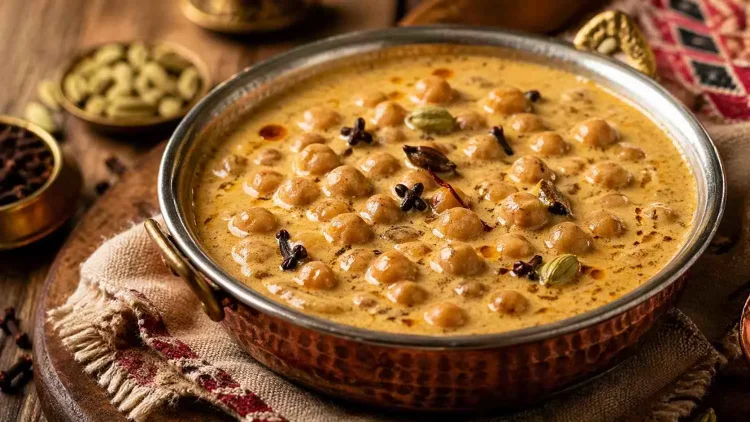
Chamba Madra is a traditional Himachali dish made with chickpeas or kidney beans cooked in a rich yogurt-based gravy, flavored with whole spices. It is a key part of the famous Himachali Dham and represents the Chamba district’s royal culinary heritage.
What is Chamba Madra?
Chamba Madra is a signature dish of Himachali cuisine known for its rich texture and unique flavor profile. It stands out from typical Indian curries due to its yogurt-based preparation.
● A yogurt-based curry made with legumes such as chickpeas (chana) or kidney beans (rajma)
● Cooked using desi ghee, giving it a deep, aromatic richness
● Features a thick, creamy consistency with a mildly spiced taste
Origin of Chamba Madra
Chamba Madra originates from the culturally rich region of Chamba in Himachal Pradesh.
● Deeply rooted in the traditions of Chamba district
● Traditionally prepared during festivals, weddings, and religious ceremonies
● A staple dish in the grand Himachali Dham feast
Ingredients Used in Chamba Madra
The richness of Madra comes from simple ingredients cooked with care and traditional techniques.
● Chickpeas (chana) or kidney beans (rajma)
● Yogurt (curd) as the base of the gravy
● Desi ghee for authentic flavor
● Whole spices such as cloves, cardamom, cinnamon, and cumin
● Dry fruits (optional) for added richness and royal touch
Also Read: Joshimath – Gateway to Auli & Badrinath | Travel Guide
How Chamba Madra is Prepared (Traditional Method)
The preparation of Madra is slow and methodical, which enhances its flavor.
- Soak chickpeas overnight and boil until soft
- Whisk yogurt to create a smooth base
- Heat desi ghee and add whole spices for tempering
- Add yogurt carefully and cook on low heat to prevent curdling
- Mix in boiled chickpeas and slow-cook until thick and flavorful
Role of Madra in Himachali Dham
Madra holds a central place in the traditional Himachali feast known as Dham.
● One of the main and most awaited dishes in Dham
● Served during weddings, festivals, and religious gatherings
● Symbolizes hospitality, celebration, and cultural identity
Taste & Nutritional Value
Chamba Madra is not just flavorful but also nourishing.
● Rich, creamy, and mildly spiced taste
● High in protein due to legumes
● Energy-rich because of desi ghee
● Provides warmth, making it ideal for mountain climates
Why is Chamba Madra Called a Royal Dish
Madra is often referred to as a royal dish due to its luxurious preparation and historical significance.
● Traditionally served to honored guests during royal feasts
● Uses rich ingredients like ghee and dry fruits
● Represents celebration, prosperity, and pride in Himachali culture
Best Places to Try Chamba Madra
To experience authentic Chamba Madra, explore local culinary settings.
● Traditional dhabas in Chamba
● Himachali Dham events during weddings and festivals
● Homestays offering homemade Himachali cuisine
FAQs
Chamba Madra is a yogurt-based Himachali dish made with chickpeas or kidney beans and cooked with aromatic spices.
It is a key dish in Himachali Dham and represents the region’s traditional and festive cuisine.
Chickpeas or rajma, yogurt, desi ghee, and whole spices like cloves and cardamom.
Yes, it is one of the main dishes served in a traditional Dham feast.
It is slow-cooked in yogurt gravy with spices and legumes, using desi ghee.
It has a rich, creamy, mildly spicy, and slightly tangy flavor.
Yes, it is a completely vegetarian dish.
It is served during festivals, weddings, and religious gatherings.
You can try it in Chamba’s local eateries, traditional feasts, or homestays.
Due to its rich ingredients, traditional preparation, and association with festive and royal feasts.