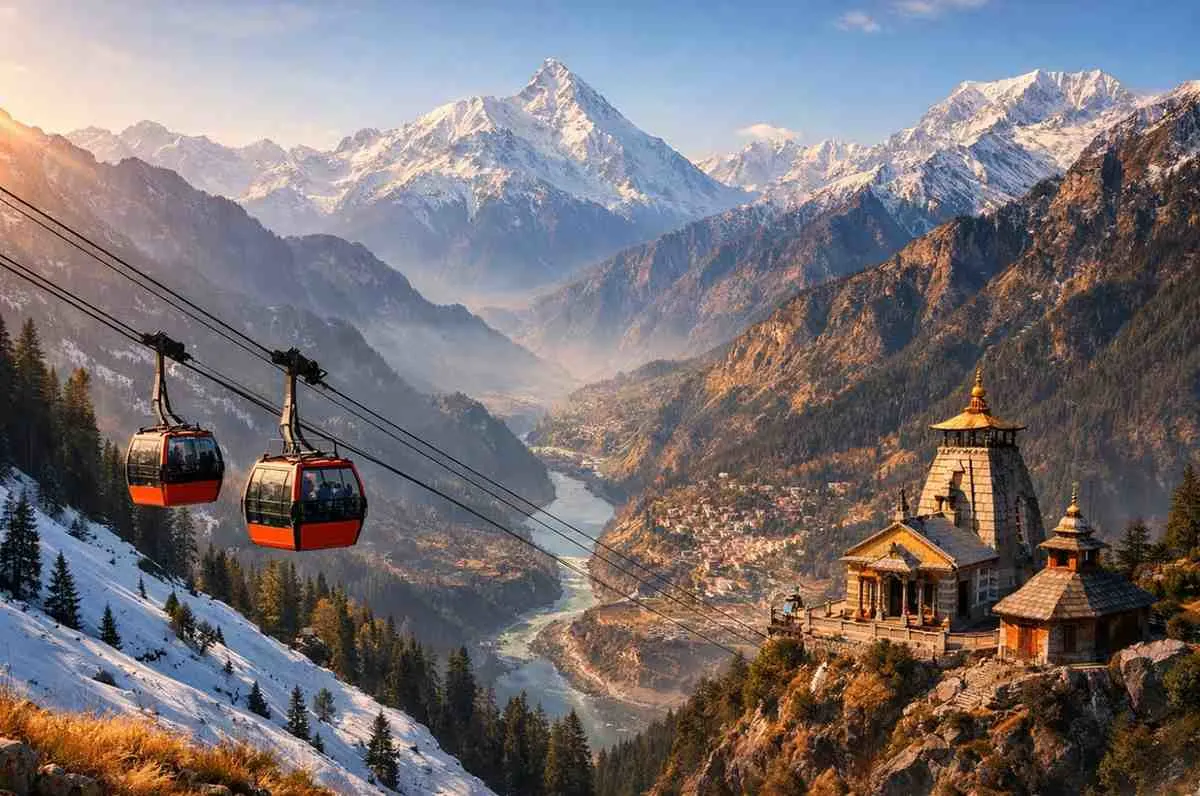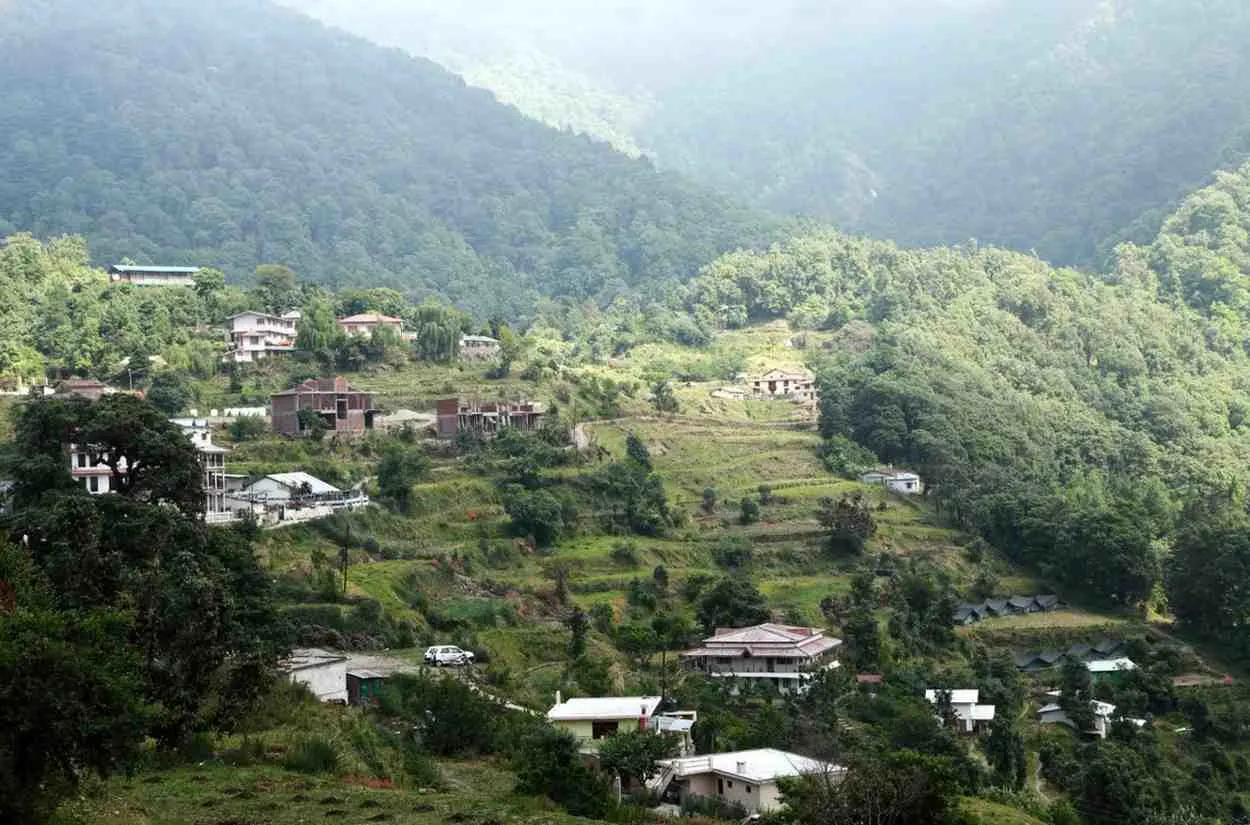

Perched on one of the highest ridges in the Shimla district, Hatu Mata Temple is a soul-soothing blend of Himalayan spirituality and staggering mountain scenery. Located near Narkanda in Himachal Pradesh, this sacred shrine is dedicated to Goddess Kali, venerated locally as Hatu Mata. At roughly 11,000 ft (≈3,400 m) above sea level on Hatu Peak, the temple rewards pilgrims and travelers with clean air, cedar-scented breezes, and 360-degree vistas that stretch across snow-lined summits and deep, forested valleys.
Whether you are drawn by faith, photography, or the promise of quiet time in nature, Hatu Mata Temple offers an experience that’s equal parts devotion, culture, and high-altitude calm. The approach itself—through orchards, deodar forests, and a narrow mountain road or a short trek—feels like a gentle rite of passage. By the time you step onto the ridge and hear the bell ring in the wind, the journey has already begun to work its charm.
About Hatu Mata Temple
1. Origins, Mythology, and Local Belief
Hatu Mata Temple is rooted in Himachali folk traditions and the broader Shakta devotion to Goddess Kali, a fierce yet protective form of the Divine Mother. In the local idiom, “Hatu Mata” embodies the guardian spirit of the mountain—a benevolent force believed to watch over the surrounding villages, orchards, and travelers on the winding Himalayan roads.
One of the most enduring legends connects Hatu Peak with the Pandavas from the Indian epic Mahabharata. Locals believe the Pandavas spent part of their vanvas (exile) in this region. Some versions of the tale suggest the ridge may have served as a vantage or a resting point during their wanderings. A nearby rock formation is sometimes pointed out by villagers as associated with these legends. As with many Himalayan myths, history and folklore interlace to create a vivid spiritual backdrop that enriches your visit.
2. Hatu Mata in Local Folklore
For residents of Kotgarh, Kumarsain, Thanedar, and Narkanda, Hatu Mata is a living deity—a presence woven into the rhythms of sowing, harvest, travel, and protection. Families offer prayers for prosperity, safe journeys, timely rains, and community well-being. Seasonal fairs and smaller household rituals keep the relationship between deity and devotee warm and immediate, something you can sense in the gentle etiquette of the temple and the quiet reverence of visitors.
Hatu Mata Temple Location & How to Reach
- Location: Hatu Peak, near Narkanda (Shimla district), Himachal Pradesh, India
- Distance from Shimla: ~70 km by road (via NH5)
- Approach: Narkanda → Hatu Peak road/track (final stretch often done as a 3 km trek; some travelers drive up when road conditions allow)
Getting There (Overview Table)
| Mode | Route | Notes |
| By Road | Shimla → Theog → Matiana → Narkanda → Hatu Peak | Scenic 70 km drive on NH5; last leg to Hatu Peak is narrow and winding. Many visitors walk/trek the final ~3 km for safety and serenity. |
| By Train | Kalka → Shimla (narrow gauge) → Road to Narkanda | The heritage Kalka–Shimla line brings you to Shimla; continue by road to Narkanda. |
| By Air | Shimla (Jubbarhatti) Airport → Road to Narkanda | Small mountain airport; flight schedules vary. Alternatively, Chandigarh airport (bigger connectivity) → road (longer but often reliable). |
Getting There (Overview Table) Driving Notes:
- The road from Narkanda to Hatu Peak is narrow and steep in sections, with tight hairpins and occasional patches of loose gravel or ice in winter. If you’re not comfortable on such roads, park at a safe point below and walk the final stretch.
- In monsoon or fresh snow, conditions can be slippery. Check locally before starting, and avoid peak fog hours.
Hatu Mata Temple Architecture & Design: Wooden Beauty in the Clouds
Himachal’s temple architecture balances resilience with artistry, and Hatu Mata Temple is a glowing example. Built in the traditional Himachali wooden style, the structure features:
- Intricate wood carvings that depict floral patterns, geometric borders, mythic motifs, and protective symbols common to the region’s sacred art.
- Use of local timber and slate roofing, designed to withstand high-altitude weather—snowfall, strong winds, and wide temperature swings.
- A compact, dignified sanctum (garbhagriha) that fosters focus and humility in worship.
- An outer courtyard/space where devotees gather quietly; on clear days, you can see panoramic snow peaks floating beyond the temple’s eaves.
The craftsmanship resonates with similar wooden temples across the Sutlej valley and Kullu belt, reflecting a centuries-old carpentry tradition adapted to the mountain climate. The resulting aesthetic is warm, textured, and deeply rooted in place—sacred architecture that belongs to the ridge as naturally as the deodar trees around it.
Natural Setting: The Ridge That Feels Like a Balcony to the Himalayas
Stand beside the temple, and you’ll understand why this site is special. Hatu Peak forms a long, high ridge line, and the temple sits near its crown. From here, the Himalayas spread out like a living map—snowfields in winter, raked shadows at sunset, and an ocean of conifers rolling down to the valleys. On a still morning, clouds drift like slow caravans across the sky, and you might hear nothing but wind and the occasional bell.
What nature lovers will appreciate:
- Sunrise and sunset light that ignites the peaks in gold and rose.
- Deodar and pine forests rich in birdsong; a rewarding place for patient listeners and photographers.
- Clear-day vistas that can reach far ridgelines after post-monsoon skies scrub clean.
If you enjoy photography, bring a wide-angle lens for the ridge panorama and a portrait lens for the temple details. A lightweight tripod helps for blue-hour shots, and a circular polarizer can reduce glare from the slate roof while enriching sky contrast.
Things to Do Near Hatu Mata Temple
The temple bestows peace; the peak and its surroundings give you reasons to linger.
1) Hatu Peak Viewpoint
The ridge around the temple doubles as a natural viewpoint. Wander a few minutes in different directions to find clean sightlines for shooting sunrise/sunset. The light travels fast at altitude; frame shots early, and be ready for dynamic cloud play.
2) Tani Jubbar Lake
A small, oval-shaped lake near Narkanda, bordered by deodar forests and orchards. It’s a quiet picnic and photography spot with a small Nag Devta Temple beside the water. The road and walk are gentle, making it a perfect counterpoint to Hatu Peak’s high drama.
3) Apple Orchards
The Narkanda–Kotgarh–Thanedar belt is legendary for Himachali apples. In spring, blossoms dust the slopes in pale pinks and whites. In late summer and early autumn, orchard work hums with harvest activity. Many homestays and small farms offer tastings or sell local jams, pickles, and juices.
4) Local Market
Stop by Narkanda market for woolens, handicrafts, wooden souvenirs, and organic produce (honey, walnuts, dried apricots). Shopping small here keeps money circulating locally and supports families that nurture these hills through all seasons.
Best Time to Visit Hatu Mata Temple
While the temple is open year-round, each season serves a different vibe. Choose based on your comfort with the weather and road conditions.
| Season | Duration | Highlights |
| Summer | Apr–Jun | Pleasant days, cool evenings, clear views; ideal for first-time visitors. |
| Monsoon | Jul–Sep | The forest turns neon-green, but roads can be slippery and fog reduces visibility. |
| Winter | Dec–Feb | Snowfall, frozen landscapes, and a pristine white temple surround; very cold with possible road closures after fresh snow. |
Pro tip:
- Post-monsoon (Oct–Nov) often gifts crystal skies and long sightlines—fantastic for photography without the deep cold of mid-winter.
- If you’re traveling in peak winter, check conditions in Narkanda and seek local guidance before attempting the peak road.
Hatu Mata Temple Local Culture & Festivals
1. The Hatu Mata Fair
A much-loved annual fair celebrates Hatu Mata with folk music, dance, ritual offerings, and communal feasting. On these occasions, villagers from Kotgarh, Kumarsain, and Narkanda gather to renew bonds with the goddess and each other. Dates can shift, but the atmosphere is heartfelt and welcoming—a living thread of devotion connecting generations.
2. Everyday Devotion
Outside festival days, the temple remains a tranquil pilgrimage for locals who come to seek blessings for prosperity, protection, and good harvests. Observing respectfully—removing shoes, keeping voices low, and asking before photographing people—allows you to share the space without intruding.
Hatu Mata Temple Visitor Tips (Read Before You Go)
- Dress in layers: Even summers are cool on the ridge. Carry a light fleece or woolen; in winter, add thermals, gloves, and a beanie.
- Footwear: Choose shoes with good grip; the approach can be damp, snowy, or leaf-strewn.
- Driving: Avoid driving to the very top in fresh snow or dense fog unless you are highly confident and your vehicle is suitable. Many travelers park lower and walk the final ~3 km.
- Respect customs: Remove shoes at sacred spots, dress modestly, and keep music low or off.
- Carry water/snacks: There are limited shops near the peak; stock up in Narkanda.
- Trash: Pack in, pack out. Use a small trash bag; don’t leave food scraps—it attracts animals.
- Network: Signal can be intermittent; download maps offline.
- Sun & altitude: Use sunscreen and sunglasses; at ~11,000 ft the sun can be sharp even when it’s cool.
A Thoughtful Itinerary (1–2 Days) Hatu Mata Temple
1. Day Trip from Shimla
- Early start → Narkanda breakfast stop → Hatu Mata Temple (mid-morning; walk last stretch) → spend time on the ridge for views and quiet worship → descend to Tani Jubbar Lake → late lunch around Narkanda → scenic drive back to Shimla.
2. Overnight in Narkanda
- Day 1: Shimla → Narkanda check-in → sunset recce at Hatu Peak (or keep for Day 2 if clouds roll in).
- Day 2: Sunrise at Hatu Mata Temple → orchard stroll → Tani Jubbar Lake → local market and produce shopping → return.
Hatu Mata Temple Responsible Travel
- Support local livelihoods: Choose homestays, hire local guides/drivers in winter, and buy farm produce direct when possible.
- Cultural respect: Ask before photographing people, especially during rituals.
- No drones during prayers: And avoid flying over the temple structure without explicit permission.
- Wildlife & flora: Don’t pick alpine flowers or feed animals.
- Fire safety: Absolutely no open flames near forest edges—dry needles and wind are a risky mix.
Hatu Mata Temple Photography Tips
- Golden hours: Arrive 30–45 minutes before sunrise/sunset; the light shifts swiftly.
- Composition: Use leading lines—the ridge path, temple eaves, or slate roof edges—to guide the eye toward distant peaks.
- Gear: A wide-angle (14–24mm on full frame) for landscapes; 35/50mm for temple details; 70–200mm to isolate far ridgelines.
- Weather play: Mist and cloud breaks can create dramatic layers; bracket exposures to handle bright skies and dark forests.
- Respectful shooting: Avoid flash in or around the sanctum; keep the mood serene.
Where to Stay & Eat Hatu Mata Temple (General Guidance)
Stay:
Narkanda offers homestays, guesthouses, and small hotels across budgets. Book ahead during blossom season (spring) and snow windows (winter). If you prefer traditional vibes, look for wooden homestays in Kotgarh/Thanedar.
Eat:
Expect hearty mountain fare—parathas, rajma-chawal, momos, noodles, thukpa, and seasonal vegetables. Apple-based desserts and juices are a delight. Carry a thermos of chai or ask your stay to pack one for the peak visit.
(Note: Specific hotel/restaurant names change frequently; check recent reviews or ask your host for up-to-date recommendations.)
Hatu Mata Temple Safety & Seasonal Notes
- Summer (Apr–Jun): Best for first-time visitors; watch for afternoon thunderstorms.
- Monsoon (Jul–Sep): Frequent fog, slick roads; drive slowly and consider the walk-up.
- Autumn (Oct–Nov): Often the clearest long-range views; crisp mornings and evenings.
- Winter (Dec–Feb): Snow adds magic and risk. Carry warm layers, start earlier, and consult locals about road closures or ice.
Conclusion
Hatu Mata Temple is far more than a tick on a checklist—it’s a spiritual retreat where the Himalayas, heritage, and humility meet. The wooden sanctuary glows with care, the ridge breathes with old stories, and the sky seems close enough to touch. Come for the darshan; stay for the quiet. If your idea of travel includes moments that reset the heart and clear the mind, this hilltop temple in Narkanda, Himachal Pradesh deserves a special place on your map.