
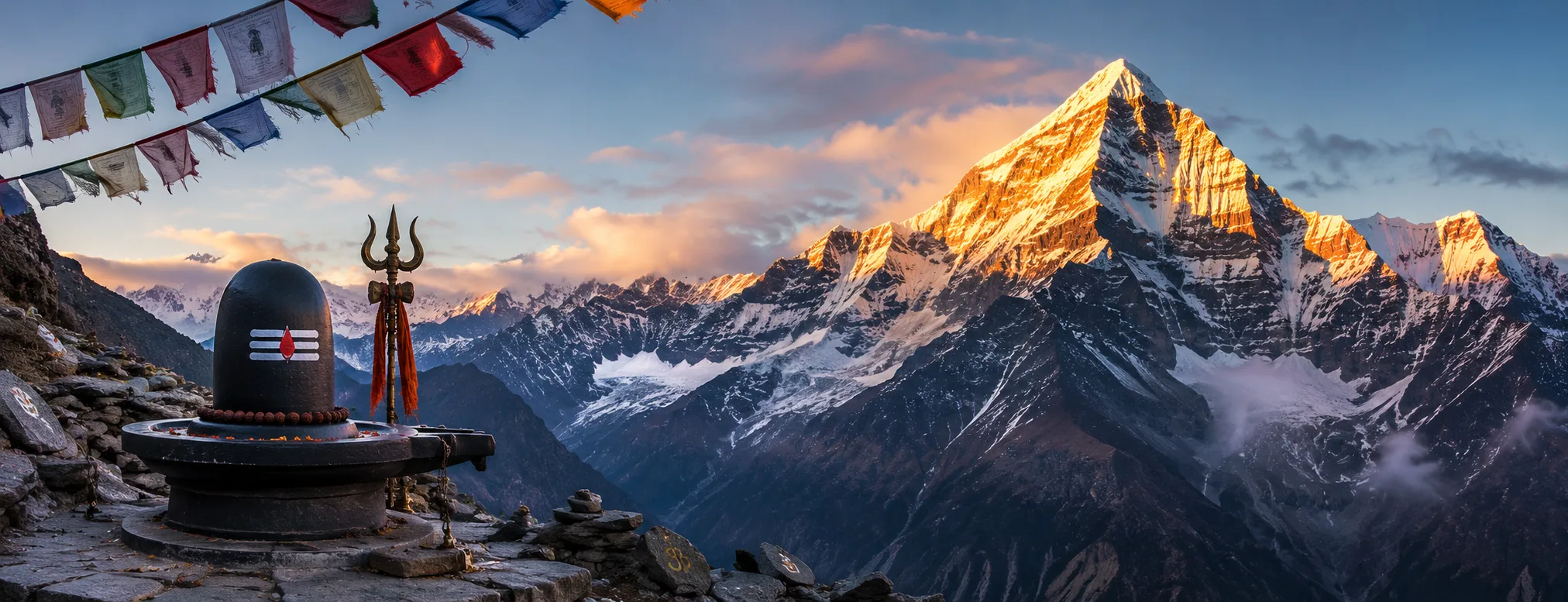
Kinner Kailash 2026: Complete Guide to the Trek, Kalpa View Point & Permits
Kinner Kailash, located in Himachal Pradesh's Kinnaur district, is a sacred Himalayan destination associated with Lord Shiva and an important pilgrimage site for devotees. The Kinner Kailash range can be viewed from places such as Kalpa, while the traditional Kinnaur Kailash Yatra takes pilgrims into the high-altitude mountain landscape to reach the sacred Shivling.

However, the 2026 Kinnaur Kailash Yatra has been postponed until further orders by the District Administration, Kinnaur, because of serious safety hazards along the pilgrimage route. Travellers should not attempt the pilgrimage until an official resumption notice is issued.
| Editorial Note: This guide has been prepared using official district administration information and established travel references. The author has not personally completed the Kinner Kailash trek. Route conditions, registration rules, permits and accessibility can change, so travellers should verify the latest instructions with the District Administration, Kinnaur, before travelling. |
Quick Facts: Kinner Kailash at a Glance
Kinner Kailash at a Glance
| Detail | Information |
|---|---|
| Location | Kinnaur district, Himachal Pradesh |
| Main gateway | Reckong Peo |
| Popular viewpoint | Kalpa |
| Pilgrimage | Kinnaur Kailash Yatra |
| Terrain | High-altitude Himalayan terrain |
| Difficulty | Difficult to very difficult |
| Current 2026 status | Postponed until further orders |
| Registration | Mandatory when the official yatra operates |
| Medical fitness | Required under the 2026 yatra guidelines |
Can You Visit Kinner Kailash Without Trekking?
Yes. Travellers do not need to undertake the pilgrimage trek to experience the Kinner Kailash landscape.
Kalpa is one of the best-known places from which visitors can enjoy views of the Kinner Kailash range. The town is surrounded by apple orchards and traditional Kinnauri landscapes and makes a convenient base for exploring the region.
This option is suitable for travellers who want mountain views, local culture and a peaceful Himalayan stay without attempting a demanding high-altitude trek.
Importantly, viewing Kinner Kailash from Kalpa is different from undertaking the Kinnaur Kailash Yatra.
Two Ways to Experience Kinner Kailash
1. View it from Kalpa — no trek required
This is how most visitors actually experience Kinner Kailash. The peak and its surrounding range are clearly visible from Kalpa, a small apple-orchard town at around 2,960 metres that sits directly across the valley. Sunrise from Kalpa, when the range turns gold and pink, is one of the most photographed views in Kinnaur, and it takes nothing more than a short walk from most guesthouses. If your goal is simply to see Kinner Kailash rather than reach the Shivling itself, a night or two in Kalpa delivers that without any trekking gear or permits.
2. Trek to the Shivling — a serious high-altitude yatra
For pilgrims and experienced trekkers, the actual yatra climbs from Tangling village (around 2,300 m near Reckong Peo) to the Shivling at approximately 4,800 m — about 2,500 metres of elevation gain over 14 km one-way. This is not a scenic walk with a shrine at the end; it's a steep, high-altitude trek over loose rock and scree, above the treeline for most of the route, and it demands serious physical preparation.
Kinnaur Kailash Yatra: What You Should Know
The Kinnaur Kailash Yatra is a high-altitude religious pilgrimage rather than a casual sightseeing trek. The route involves steep terrain, changing weather and significant elevation gain.
For 2026, the District Administration initially announced the yatra for 30 July to 10 August, with registration and medical requirements. However, after a route inspection identified glaciers, unstable boulders, rockfall, landslide risks and dangerous debris, the administration postponed the yatra until further orders.
Do not rely on previously announced dates. Check the latest official notification before planning the pilgrimage.
Kinnaur Kailash Trek Route
The traditional pilgrimage route involves high-altitude terrain and should only be attempted when the administration officially opens the route.
A typical route description includes stages through the Tangling area and higher camps before reaching the sacred Shivling. Exact route access, camping arrangements and permitted sections can vary depending on weather and administrative instructions.
The District Administration's 2026 safety notice specifically identified dangerous sections along the route, including the area between Gufa and Sorang and the stretch from Miling Khata towards the Holy Cave.
For this reason, travellers should not use old trek itineraries or unofficial shortcuts when the yatra resumes.
Kinner Kailash Parikrama
The Kinner Kailash Parikrama is a different and more demanding trekking experience from the standard pilgrimage.
The District Kinnaur administration describes a route involving Thangi, Charang, Lalanti and Chitkul, with difficult high-altitude sections and passes. The official district trekking information notes that the route includes steep climbs and very challenging terrain.
This route should be considered only by experienced high-altitude trekkers with appropriate preparation, equipment and local guidance.
Mythological and Cultural Significance
Kinner Kailash holds deep religious importance for devotees of Lord Shiva. The sacred Shivling associated with Kinner Kailash is an important part of local pilgrimage traditions.
The surrounding Kinnaur region is also known for its distinctive cultural heritage, traditional architecture, festivals and a blend of religious traditions. Visiting Kinner Kailash is therefore not only about the mountain but also about understanding the cultural landscape of Kinnaur.
Religious beliefs and local traditions surrounding the Shivling should be treated respectfully rather than presented as scientifically established facts.
Kinner Kailash Location
Kinner Kailash is located in Kinnaur district of Himachal Pradesh, in the high Himalayan landscape close to the Indo-Tibetan border region.
Reckong Peo is the district headquarters and an important gateway for exploring Kinnaur. Kalpa is one of the most popular nearby destinations for travellers looking for mountain views and a quieter stay.
The Kinnaur district administration also identifies the region's natural landscapes, traditional lifestyle, culture and heritage as important parts of its tourism appeal.
Permits and Registration for Kinner Kailash
Permit requirements should not be confused with Kinnaur Kailash Yatra registration.
For the pilgrimage, the 2026 official notice stated that no pilgrim would be permitted to undertake the yatra without valid registration. It also required a medical fitness certificate and health check-up.
For visitors travelling towards protected or restricted areas of Kinnaur, separate permit requirements can apply. The District Kinnaur administration states that foreign visitors entering designated protected areas require the appropriate permit from the competent authority.
Because regulations can change, travellers should confirm:
- Whether the Kinnaur Kailash Yatra is officially open
- Current registration procedure
- Medical certificate requirements
- Any applicable permit requirements
- Route restrictions
- Local weather and road conditions
Do not assume that an old permit rule or registration process is still valid in 2026.
2026 Safety Update
The latest official update is particularly important for anyone planning a Kinner Kailash pilgrimage.
The District Administration postponed the 2026 yatra after a reconnaissance team reported:
- Glaciers along the route
- Unstable boulders
- Continuous rockfall risk
- Landslides
- Falling debris caused by snow and ice melt
- Dangerous conditions between Miling Khata and the Holy Cave
- A blocked section between Gufa and Sorang
The administration has asked devotees not to undertake the pilgrimage until an official announcement confirms its resumption.
Best Time to Visit Kinner Kailash
The best time depends on what you want to do.
For viewing Kinner Kailash from Kalpa
Clear-weather periods are generally preferable for mountain views. Weather can change quickly in the Himalayas, so visibility should not be guaranteed.
For the Kinnaur Kailash Yatra
Do not choose dates solely based on a general trekking season. The pilgrimage is subject to official opening dates, weather and route safety.
For 2026, the yatra is currently postponed until further orders. Travellers should wait for an official reopening announcement.
Places to Visit Around Kinner Kailash
Kalpa
A quiet town with apple orchards, Kinnauri architecture, and arguably the best unobstructed view of the Kinner Kailash range in the region. See our Himachal Pradesh places to visit guide for more on Kalpa and the rest of Kinnaur.
Reckong Peo
The administrative and cultural hub of Kinnaur, with local markets, temples, and monasteries worth a stop before heading further into the valley.
Sangla Valley
A scenic valley nearby, popular for short walks, apple orchards, and views of snow-capped peaks — a natural add-on to a Kinner Kailash trip.
Chitkul
The last inhabited village on the Indo-Tibetan border, roughly 22 km past Sangla. It's one of the most-visited extensions of a Kinnaur trip — read the full guide: Chitkul: The Last Inhabited Village of India (Himachal Pradesh).
Roghi Village and Suicide Point
Dramatic cliffside views over the valley below, and one of the most photographed viewpoints in the region.
How to Reach Kinner Kailash
By Road
Road travel is the primary way to reach Kinnaur. Travellers generally approach the region through Shimla and continue towards Reckong Peo and Kalpa.
Travel time can vary significantly because of road, weather and traffic conditions. Check current road conditions before starting the journey.
By Air
Shimla Airport is one of the nearest commercial airports for travellers approaching Kinnaur, followed by a road journey.
By Rail
Shimla is the nearest major rail-connected destination commonly used for onward road travel towards Kinnaur.
Where to Stay
For a Kinner Kailash trip, Reckong Peo and Kalpa are practical accommodation bases. Sangla can also be added to a wider Kinnaur itinerary.
Accommodation ranges from guesthouses and homestays to hotels. During the peak travel season, advance booking is advisable.
What to Carry
If the pilgrimage is officially reopened, the district administration's 2026 guidelines recommend carrying:
- Warm clothing
- Rain protection
- Sturdy trekking shoes
- Torch
- Water bottle
- Essential medicines
- Trekking stick
- Valid identification documents
- Required registration and medical documents
The official guidelines also advise travellers to acclimatise properly, stay with their group and follow the designated route.
Important Safety Tips
Kinner Kailash is a high-altitude pilgrimage and should not be treated as an ordinary weekend trek.
- Check the latest official opening notice before travelling.
- Do not start the pilgrimage if the administration has suspended it.
- Complete the required registration and medical checks.
- Follow only the designated route.
- Do not use shortcuts.
- Avoid night trekking.
- Stay with your group.
- Allow sufficient time for acclimatisation.
- Carry appropriate clothing and footwear.
- Follow instructions from local authorities and guides.
- Respect religious sites and the local environment.
The 2026 official guidelines specifically prohibit undertaking the journey without registration and health checks and advise pilgrims not to trek at night or use shortcut routes.
Kinner Kailash: Trek or Kalpa View?
Both experiences are very different.
Choose Kalpa if:
You want mountain views, local culture, photography, apple orchards and a relaxed Kinnaur experience.
Consider the pilgrimage only when officially open if:
You are physically prepared for high-altitude terrain and are travelling specifically for the religious experience.
The most important point for 2026 is that the official Kinnaur Kailash Yatra is currently postponed until further orders.
Final Takeaway
Kinner Kailash combines Himalayan scenery, religious significance and the distinctive culture of Kinnaur. You can experience the landscape without trekking by staying in Kalpa, while the traditional pilgrimage offers a much more demanding high-altitude experience.
However, 2026 requires special caution. The Kinnaur Kailash Yatra has been postponed until further orders because of serious hazards identified along the route. Anyone planning the pilgrimage should rely on the latest notification from the District Administration, Kinnaur rather than older travel dates or unofficial trek information.
Official source: District Administration, Kinnaur — Kinnaur Kailash Yatra 2026 public notices and tourist guidelines.
Frequently Asked Questions
More from
Himalayas Digital
Top Places to Visit in Kashmir: 10 Best Tourist Destinations for 2026

Morjim Beach Goa: Things to Do, Best Time, How to Reach & Travel Guide 2026

Palolem Beach Goa: Things to Do, Best Time, How to Reach & Travel Guide 2026

Colva Beach Goa: Things to Do, Best Time, How to Reach & Travel Guide 2026